QR vs China programmable NFC tag for smart packaging
XIAMEN, FUJIAN , CHINA, April 13, 2026 /EINPresswire.com/ -- As brands accelerate their digital transformation and smart packaging initiatives, the debate between QR codes and NFC technology has become increasingly important. In the middle of supplier evaluations—from a China waterproof NFC stickers wholesale supplier to full IoT solution providers—global companies are reassessing which technology delivers the greatest long-term value. Xminnov Group, headquartered in Xiamen, China, brings more than 16 years of expertise in RFID and IoT innovation, helping brands navigate the transition from traditional QR-based engagement to advanced programmable NFC solutions that are compilable with blockchain, adding value through traceability, security, and digital asset authentication.
With applications spanning retail, pharmaceuticals, luxury goods, logistics, and smart packaging, both QR codes and NFC tags have their place. However, the rapid evolution of connected products is shifting the balance in many use cases. The following analysis highlights the key differences and explains why programmable NFC tags from China are gaining strong momentum, especially when integrated with blockchain-enabled solutions for enhanced supply chain trust and asset provenance.
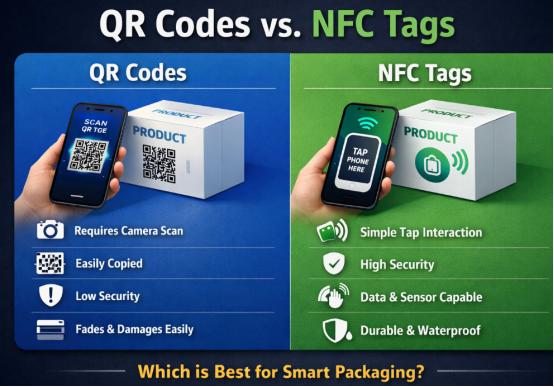
Understanding the Basics: QR Codes vs NFC Tags
Before comparing the technologies, it is important to clarify how each works.
QR Codes
Visual, printed matrix barcode
Requires camera scanning
Static or dynamic URL redirection
Very low implementation cost
No embedded electronics
Programmable NFC Tags
Embedded microchip and antenna
Wireless short-range communication
Tap-to-interact user experience
Rewritable memory capability
Supports authentication, sensing, and blockchain compatibility
While QR codes remain widely used, NFC technology is increasingly favored for premium smart packaging applications, particularly when brands aim for secure, blockchain-verifiable interactions .
Advantage 1: Superior User Experience
One of the most visible differences is the interaction method.
QR Code Experience
Requires opening camera
Needs proper lighting
Must align scan angle
Can be interrupted by glare or damage
NFC Experience
Simple tap with smartphone
Works without camera
Faster interaction
More intuitive for consumers
Compatible with blockchain-based asset tracking
As consumer expectations shift toward frictionless engagement, brands are prioritizing tap-based experiences. Xminnov’s programmable NFC solutions are designed specifically to support seamless smartphone interaction in retail and packaging environments while enabling blockchain-enabled verification for additional trust and product authenticity.
Advantage 2: Enhanced Security and Anti-Counterfeiting
Security is a major concern in industries such as pharmaceuticals, cosmetics, and luxury goods.
QR Code Limitations
Easily copied or reprinted
Difficult to prevent cloning
Visible data structure
Limited authentication capability
Programmable NFC Strengths
Unique chip-level UID
Encrypted memory options
Tamper-evident designs
Secure authentication protocols
Blockchain integration for immutable verification
Xminnov Group’s product portfolio—including RFID tamper-proof tags and secure NFC solutions—enables brands to implement stronger anti-counterfeiting measures, with blockchain compatibility adding an additional layer of traceable value directly within the packaging.
Advantage 3: Richer Data and Sensor Integration
Modern smart packaging is moving beyond simple redirection toward real-time product intelligence.
QR Code Capabilities
Typically links to web content
Limited on-package intelligence
No environmental sensing
No real-time state monitoring
NFC IoT Capabilities
Writable memory
Sensor integration support
Condition monitoring
Product lifecycle tracking
Interactive consumer engagement
Blockchain-ready data for audit and provenance
Because Xminnov also develops sensor tags and Bluetooth tags, customers can build multi-layer intelligent packaging systems rather than relying on static codes. Combined with blockchain, these NFC tags provide immutable, verifiable product data throughout the supply chain .
Advantage 4: Durability in Harsh Environments
Packaging often faces moisture, abrasion, temperature changes, and handling stress.
QR Code Risks
Ink fading
Surface scratching
Print distortion
Label damage
NFC Tag Advantages
Encapsulated chip
Industrial-grade materials
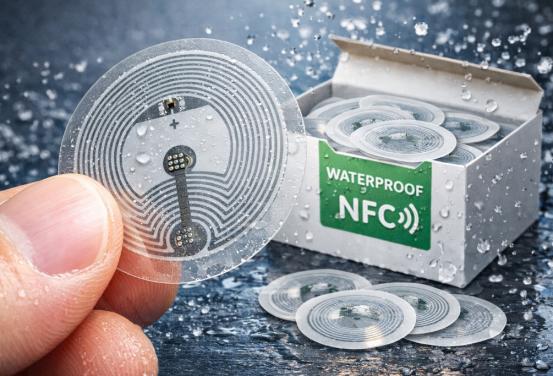
Waterproof options
Resistant to wear and tear
As a manufacturer experienced in harsh-environment IoT products, Xminnov engineers its NFC tags and RFID solutions for durability across demanding logistics and retail conditions. This robustness also ensures block chain-linked data remains trustworthy throughout the asset life cycle .
Advantage 5: Greater Brand Control and Flexibility
Programmability is a major differentiator in long-term smart packaging strategy.
QR Codes
Mostly fixed after printing
Limited post-production flexibility
Harder to update offline
Less granular control
Programmable NFC Tags
Rewritable memory
Dynamic data capability
Multi-stage lifecycle use
Better integration with digital platforms
Compatible with blockchain-based verification and digital asset management
This flexibility allows brands to update campaigns, track distribution, manage product authentication over time, and link product events securely to a blockchain ledger, increasing brand credibility and consumer trust .
Advantage 6: Scalable Manufacturing from China
China’s electronics manufacturing ecosystem has dramatically accelerated NFC adoption by reducing cost barriers.
Xminnov Group supports global scale through:
1.Established 10,000 m² factory
2.Expanding 110,000 m² XMINNOV IoT Industrial Park
3.Eight dedicated buildings
4.Integrated R&D and production
5.Hardware + software development teams
6.Full supply chain control
This infrastructure enables the company to support both pilot smart packaging projects and large-volume global rollouts while ensuring NFC tags can be blockchain-enabled for scalable traceability and digital verification .
Advantage 7: One-Stop RFID and IoT Solution Capability
Many brands prefer partners who can support future expansion beyond basic NFC.
Xminnov’s broader ecosystem includes:
RFID tamper-proof tags
RFID seals
LED tags
Sensor tags
Bluetooth tags
Custom NFC solutions with blockchain compatibility
Because the company integrates software and hardware development, customers can evolve from simple consumer engagement to full IoT visibility and secure blockchain-backed tracking without changing suppliers .
When QR Codes Still Make Sense
Despite the momentum behind NFC, QR codes remain suitable in certain scenarios:
Ultra-low-cost mass labeling
Markets with older smartphone penetration
Temporary marketing campaigns
Situations requiring visual backup
In many advanced deployments, brands now use hybrid QR + NFC packaging to maximize accessibility while preparing for future blockchain-enabled smart interactions .
Looking Ahead: The Future of Smart Packaging
The convergence of smart packaging, digital product passports, and consumer engagement platforms is accelerating the shift toward embedded intelligence. As smartphones continue to support NFC by default and brands demand stronger security, data capability, and blockchain-linked verification , programmable NFC tags are expected to capture a growing share of the market.
Manufacturers that combine:
Deep RFID heritage
Advanced NFC engineering
Large-scale production
Harsh-environment reliability
End-to-end customization
Blockchain compatibility for added value
Conclusion
While QR codes remain useful for basic applications, programmable NFC technology is rapidly emerging as the preferred solution for high-value smart packaging. Its advantages in user experience, security, durability, and data capability—especially when compilable with blockchain adding value —make it particularly attractive for brands pursuing digital transformation.
With more than 16 years of RFID and IoT expertise, extensive manufacturing infrastructure, and full-stack solution capability, Xminnov Group is well positioned to help global customers transition from traditional codes to intelligent NFC-enabled packaging systems.
Official Website: https://www.rfidtagworld.com/
With applications spanning retail, pharmaceuticals, luxury goods, logistics, and smart packaging, both QR codes and NFC tags have their place. However, the rapid evolution of connected products is shifting the balance in many use cases. The following analysis highlights the key differences and explains why programmable NFC tags from China are gaining strong momentum, especially when integrated with blockchain-enabled solutions for enhanced supply chain trust and asset provenance.
Understanding the Basics: QR Codes vs NFC Tags
Before comparing the technologies, it is important to clarify how each works.
QR Codes
Visual, printed matrix barcode
Requires camera scanning
Static or dynamic URL redirection
Very low implementation cost
No embedded electronics
Programmable NFC Tags
Embedded microchip and antenna
Wireless short-range communication
Tap-to-interact user experience
Rewritable memory capability
Supports authentication, sensing, and blockchain compatibility
While QR codes remain widely used, NFC technology is increasingly favored for premium smart packaging applications, particularly when brands aim for secure, blockchain-verifiable interactions .
Advantage 1: Superior User Experience
One of the most visible differences is the interaction method.
QR Code Experience
Requires opening camera
Needs proper lighting
Must align scan angle
Can be interrupted by glare or damage
NFC Experience
Simple tap with smartphone
Works without camera
Faster interaction
More intuitive for consumers
Compatible with blockchain-based asset tracking
As consumer expectations shift toward frictionless engagement, brands are prioritizing tap-based experiences. Xminnov’s programmable NFC solutions are designed specifically to support seamless smartphone interaction in retail and packaging environments while enabling blockchain-enabled verification for additional trust and product authenticity.
Advantage 2: Enhanced Security and Anti-Counterfeiting
Security is a major concern in industries such as pharmaceuticals, cosmetics, and luxury goods.
QR Code Limitations
Easily copied or reprinted
Difficult to prevent cloning
Visible data structure
Limited authentication capability
Programmable NFC Strengths
Unique chip-level UID
Encrypted memory options
Tamper-evident designs
Secure authentication protocols
Blockchain integration for immutable verification
Xminnov Group’s product portfolio—including RFID tamper-proof tags and secure NFC solutions—enables brands to implement stronger anti-counterfeiting measures, with blockchain compatibility adding an additional layer of traceable value directly within the packaging.
Advantage 3: Richer Data and Sensor Integration
Modern smart packaging is moving beyond simple redirection toward real-time product intelligence.
QR Code Capabilities
Typically links to web content
Limited on-package intelligence
No environmental sensing
No real-time state monitoring
NFC IoT Capabilities
Writable memory
Sensor integration support
Condition monitoring
Product lifecycle tracking
Interactive consumer engagement
Blockchain-ready data for audit and provenance
Because Xminnov also develops sensor tags and Bluetooth tags, customers can build multi-layer intelligent packaging systems rather than relying on static codes. Combined with blockchain, these NFC tags provide immutable, verifiable product data throughout the supply chain .
Advantage 4: Durability in Harsh Environments
Packaging often faces moisture, abrasion, temperature changes, and handling stress.
QR Code Risks
Ink fading
Surface scratching
Print distortion
Label damage
NFC Tag Advantages
Encapsulated chip
Industrial-grade materials
Waterproof options
Resistant to wear and tear
As a manufacturer experienced in harsh-environment IoT products, Xminnov engineers its NFC tags and RFID solutions for durability across demanding logistics and retail conditions. This robustness also ensures block chain-linked data remains trustworthy throughout the asset life cycle .
Advantage 5: Greater Brand Control and Flexibility
Programmability is a major differentiator in long-term smart packaging strategy.
QR Codes
Mostly fixed after printing
Limited post-production flexibility
Harder to update offline
Less granular control
Programmable NFC Tags
Rewritable memory
Dynamic data capability
Multi-stage lifecycle use
Better integration with digital platforms
Compatible with blockchain-based verification and digital asset management
This flexibility allows brands to update campaigns, track distribution, manage product authentication over time, and link product events securely to a blockchain ledger, increasing brand credibility and consumer trust .
Advantage 6: Scalable Manufacturing from China
China’s electronics manufacturing ecosystem has dramatically accelerated NFC adoption by reducing cost barriers.
Xminnov Group supports global scale through:
1.Established 10,000 m² factory
2.Expanding 110,000 m² XMINNOV IoT Industrial Park
3.Eight dedicated buildings
4.Integrated R&D and production
5.Hardware + software development teams
6.Full supply chain control
This infrastructure enables the company to support both pilot smart packaging projects and large-volume global rollouts while ensuring NFC tags can be blockchain-enabled for scalable traceability and digital verification .
Advantage 7: One-Stop RFID and IoT Solution Capability
Many brands prefer partners who can support future expansion beyond basic NFC.
Xminnov’s broader ecosystem includes:
RFID tamper-proof tags
RFID seals
LED tags
Sensor tags
Bluetooth tags
Custom NFC solutions with blockchain compatibility
Because the company integrates software and hardware development, customers can evolve from simple consumer engagement to full IoT visibility and secure blockchain-backed tracking without changing suppliers .
When QR Codes Still Make Sense
Despite the momentum behind NFC, QR codes remain suitable in certain scenarios:
Ultra-low-cost mass labeling
Markets with older smartphone penetration
Temporary marketing campaigns
Situations requiring visual backup
In many advanced deployments, brands now use hybrid QR + NFC packaging to maximize accessibility while preparing for future blockchain-enabled smart interactions .
Looking Ahead: The Future of Smart Packaging
The convergence of smart packaging, digital product passports, and consumer engagement platforms is accelerating the shift toward embedded intelligence. As smartphones continue to support NFC by default and brands demand stronger security, data capability, and blockchain-linked verification , programmable NFC tags are expected to capture a growing share of the market.
Manufacturers that combine:
Deep RFID heritage
Advanced NFC engineering
Large-scale production
Harsh-environment reliability
End-to-end customization
Blockchain compatibility for added value
Conclusion
While QR codes remain useful for basic applications, programmable NFC technology is rapidly emerging as the preferred solution for high-value smart packaging. Its advantages in user experience, security, durability, and data capability—especially when compilable with blockchain adding value —make it particularly attractive for brands pursuing digital transformation.
With more than 16 years of RFID and IoT expertise, extensive manufacturing infrastructure, and full-stack solution capability, Xminnov Group is well positioned to help global customers transition from traditional codes to intelligent NFC-enabled packaging systems.
Official Website: https://www.rfidtagworld.com/
Xiamen Innov Information Science & Technology Co. LTD
+ +86-592-3365675
sales@rfidtagworld.com
Legal Disclaimer:
EIN Presswire provides this news content "as is" without warranty of any kind. We do not accept any responsibility or liability for the accuracy, content, images, videos, licenses, completeness, legality, or reliability of the information contained in this article. If you have any complaints or copyright issues related to this article, kindly contact the author above.