

The MAPK/ERK Signaling Pathway: A Central Biological Hub Linking Basic Biology to Human Diseases
Mechanistic Insights into Disease Pathogenesis and Comprehensive Reagent Resources from Cloud-Clone for Target-Oriented Research
HUSTON, TX, UNITED STATES, October 13, 2026 /EINPresswire.com/ -- The mitogen-activated protein kinase/extracellular-signal-regulated kinase (MAPK/ERK) cascade governs core cellular events including proliferation, apoptosis and differentiation. Dysregulated MAPK/ERK signalling contributes broadly to tumour progression, autoimmune disorders, cardiovascular pathologies, neurodegenerative conditions and tissue regeneration processes. This release outlines key activation mechanisms of the MAPK/ERK pathway and summarizes recent research progress across multiple human disease models. Cloud-Clone offers a full portfolio of antibody-based research reagents targeting major pathway components, delivering complete experimental material support for mechanistic exploration and therapeutic target screening focused on MAPK/ERK-associated biological events.
1. Overview of the MAPK Signalling Pathway
Mitogen-activated protein kinase (MAPK) cascades are critical signalling modules that control diverse cellular behaviours such as proliferation, differentiation, apoptosis and stress responses. These cascades transmit extracellular stimuli to intracellular effector molecules via sequential kinase phosphorylation events. The core signalling hierarchy consists of three tiers: MAPK kinase kinase (MAP3K), MAPK kinase (MAPKK), and MAPK, which sequentially phosphorylate and activate downstream protein substrates. Four major distinct MAPK cascades have been characterised: ERK1/2, c-Jun N-terminal kinase (JNK1/2/3), p38 MAPK (α, β, γ, δ), and ERK5. This article focuses primarily on the well-studied MAPK/ERK signalling axis.
1.1 Biological Functions of the MAPK/ERK Pathway
The MAPK/ERK cascade serves as a vital signal-transduction module. It amplifies extracellular growth-factor-derived stimuli (pro-proliferative and differentiation cues) and relays these signals into the cell nucleus. By activating specific transcription factors, the pathway remodels gene-expression profiles and orchestrates fundamental cellular outputs including proliferation, differentiation, survival and metabolism. Excessive activation of upstream kinases and effector proteins within the ERK cascade drives the onset and progression of multiple illnesses such as cancers, inflammatory disorders, developmental defects and neurological diseases. Moreover, MAPK/ERK signalling acts as a central regulator of organ regeneration. Following injury stimuli, the pathway is rapidly activated and coordinates pro-regenerative programmes encompassing cell survival, migration, proliferation, growth, as well as transcription and translation of regeneration-associated genes.
1.2 Activation Mechanisms of the MAPK/ERK Pathway
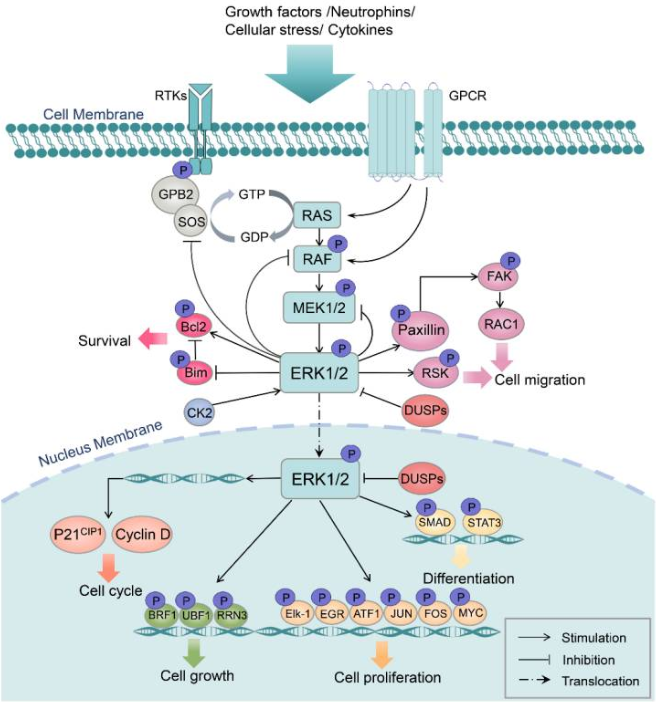
MAPK/ERK signalling is predominantly triggered when ligands bind plasma-membrane receptor tyrosine kinases (RTKs). G-protein-coupled receptors (GPCRs) can also initiate this cascade. RTK-originated signals are relayed through growth-factor-receptor-bound protein 2 (Grb2) and SOS, leading to activation of the small GTPase Ras. Ras then recruits the serine-threonine kinase Raf to the plasma-membrane complex, where Raf becomes activated via serine-residue phosphorylation-dephosphorylation cycles. Activated Raf phosphorylates and triggers MEK1/2. Subsequently, MEK1/2 phosphorylates and activates ERK1/2. Once activated, ERK1/2 modulates the activity of diverse cytoplasmic target proteins through phosphorylation and shuttles rapidly into the nucleus to phosphorylate multiple transcription-factor substrates and modify transcriptional activity. ERK1/2 also mediates negative-feedback loops by phosphorylating upstream signalling molecules including SOS and MEK.
Figure 1. Simplified schematic illustrating regulatory mechanisms and biological functions of the MAPK/ERK signalling pathway. (Reproduced from Int J Mol Sci[1])
2. MAPK/ERK Pathway Research in Cancer
Dysfunctional MAPK/ERK signalling represents a major driver for the development of numerous malignancies. Accumulated evidence demonstrates that activated MAPK/ERK signalling facilitates tumour initiation, proliferation, migration and invasion across colorectal cancer (CRC)[2], breast cancer[3], ovarian cancer[4,5], hepatocellular carcinoma[6], small-cell lung cancer[7], thyroid cancer[8], gastric cancer[9] and other tumour types. Direct or indirect suppression of MAPK/ERK signalling curbs tumour proliferation and migration and mitigates malignant cellular phenotypes[10-12]. Altered MAPK/ERK activity is also correlated with therapeutic resistance in oncology[13,14]. Intriguingly, MAPK/ERK acts as a critical modulator of sensitivity to anti-tumour immunity in glioblastoma (GB)[15]. Experimentally induced ERK phosphorylation in GB cells improves survival under immune-checkpoint-blockade (ICB) treatment and reinstates sustained anti-tumour immune responses. Multiple chemical compounds trigger tumour-cell apoptosis through modulation of MAPK/ERK signalling[16-18]. These observations establish MAPK/ERK activation as a double-edged sword in tumour progression and highlight its therapeutic potential for cancer intervention.
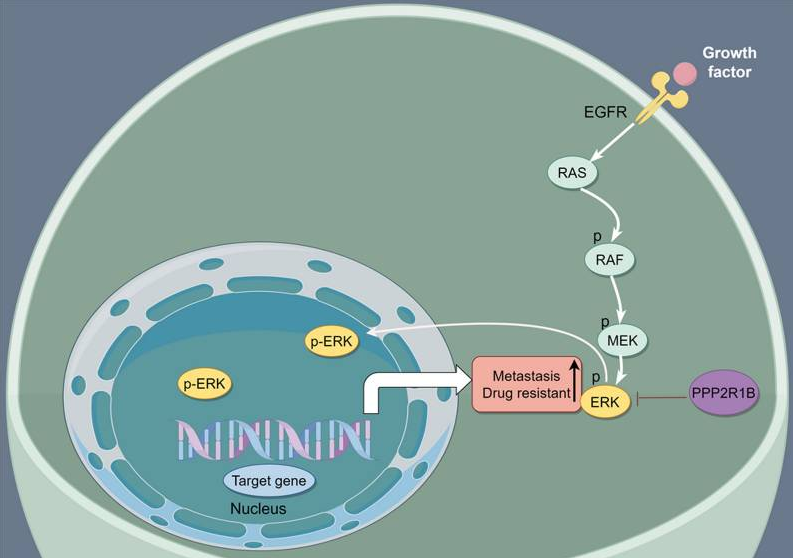
Figure 2. PPP2R1B enhances oxaliplatin sensitivity in colorectal-cancer cells by regulating the MAPK/ERK signalling pathway. (Reproduced from Cancer Cell Int[14])
3. MAPK/ERK Pathway in Autoimmune Diseases
The biological roles of MAPK/ERK signalling in autoimmune pathologies have been extensively documented. MAPK/ERK signalling mediates proliferation and migration of rheumatoid-arthritis fibroblast-like synoviocytes (RA-FLS) and contributes to rheumatoid-arthritis progression[19]. Inhibiting MAPK/ERK signalling reduces FLS proliferation and alleviates synovial inflammation[20]. Spermine mitigates disease progression in experimental multiple-sclerosis models by suppressing CD4+ T-cell activation and effector-T-cell differentiation in a MAPK/ERK-dependent manner[21]. Chlorogenic acid represses dextran-sodium-sulfate (DSS)-provoked colonic inflammation and modulates the abundance of MAPK/ERK-pathway-related proteins in colon mucosa[22]. ERK inhibitor treatment reverses the mucosal-protective effects conferred by chlorogenic acid. N-butyl baicalinate blocks pyroptosis and prevents murine colitis by binding ERK and suppressing the ROS/ERK/p-ERK/NLRP3 signalling cascade[23]. In systemic sclerosis, IL-11-dependent ERK signalling triggers dermal-fibroblast activation and promotes profibrotic phenotypes[24]. Collectively, these findings identify the MAPK/ERK pathway as a promising therapeutic target for autoimmune-disease management.
4. MAPK/ERK Pathway in Cardiovascular Diseases
Aberrant MAPK/ERK activation participates broadly in the onset and evolution of cardiovascular disorders. Under pressure-overload conditions, phosphorylated ERK1/2 activates ETS2, which forms complexes with NFAT to drive cardiac-hypertrophy phenotypes[25). Blockade of MAPK/ERK signalling halts progressive cardiomyocyte hypertrophy[26]. Down-regulated MAPK/ERK activity protects mice from angiotensin-II-evoked cardiac hypertrophy[27]. ERK1/2 signalling serves as an essential early modulator of elastase-driven aortic-valve remodelling; pharmacological ERK inhibition can slow aortic-valve disease (AVD) progression[28]. Andrographolide ameliorates aortic-valve hyperplasia by repressing cell proliferation via MAPK-ERK signalling[29]. Increased phosphorylated-ERK levels confer protection against myocardial ischaemia-reperfusion injury, limiting myocardial-infarct size and reducing cardiomyocyte apoptosis[30,31]. These experimental outputs support precise therapeutic targeting of MAPK-ERK signalling for cardiovascular-disease prevention and intervention.
5. MAPK/ERK Pathway in Neurodegenerative Diseases
MAPK/ERK signalling is a key mediator of neuroinflammation during neurodegenerative-disease pathogenesis. The neuroprotective effect of ginsenoside Rg2 in Alzheimer’s disease (AD) is linked to MAPK-ERK signalling activity[32]. Inhibition of MAPK/ERK signalling reverses Aβ₁-₄₂-mediated migratory suppression of neural stem/progenitor cells (NSPCs) and improves NSPC-based therapeutic outcomes for AD[33]. Suppression of MAPK signalling rescues neuronal death and motor-function deficits in Parkinson’s-disease (PD) mouse models[34). Blocking MAPK/ERK signalling mitigates pathological autophagy and apoptosis in cell lines harbouring LRRK2 mutations, a known PD-causing genetic alteration[35]. MAPK/ERK signalling modulates hypoxia-triggered autophagy and sustains motor-neuron viability in models carrying SOD1 mutations associated with amyotrophic-lateral-sclerosis pathology[36]. Further characterisation of pathway-specific regulatory mechanisms may accelerate novel therapeutic-agent development for neurodegenerative illnesses.
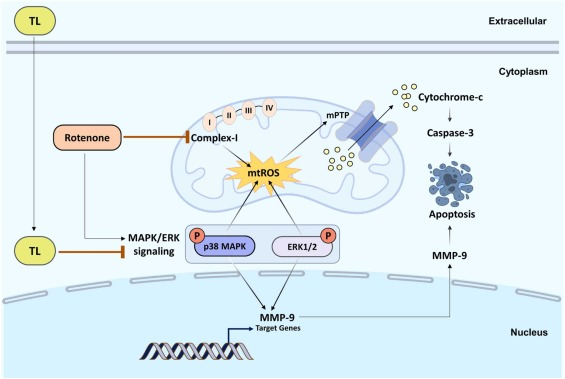
Figure 3. Mechanism underlying tolperisone-hydrochloride-mediated neuroprotection in Parkinson’s disease. (Reproduced from Biomed Pharmacother[34])
6. MAPK/ERK Pathway in Tissue Regeneration
Emerging studies underscore the vital role of MAPK/ERK signalling in tissue and organ regeneration. This pathway drives haematopoietic recovery after radiation injury, mediates electric‑field‑triggered vascular repair, and enables heart regeneration in zebrafish. It also boosts periodontal‑bone repair, mediates the bone‑regenerative effects of notoginsenoside R1, and governs hepatic progenitor‑cell activity for liver regeneration. Collectively, these findings reveal the therapeutic promise of targeting MAPK/ERK signalling to promote tissue and organ repair.
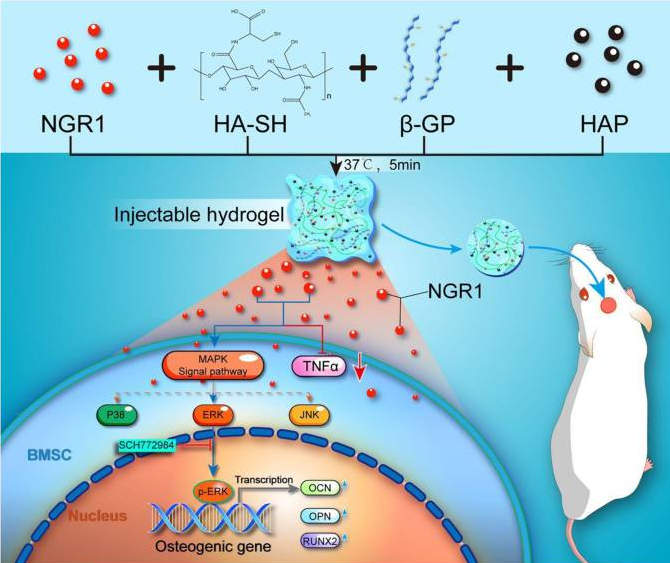
Figure 4. Notoginsenoside R1 facilitates bone-regeneration processes. (Reproduced from Front Bioeng Biotechnol[41])
Mounting evidence positions the MAPK/ERK signalling cascade as a central molecular node bridging basic cell biology and diverse human disease pathologies. It participates in tumour progression, autoimmunity, cardiovascular injury, neurodegeneration and tissue-repair responses, making it a high-priority focus for mechanistic investigation and therapeutic-target discovery. Reliable research reagents targeting individual pathway components are indispensable for unravelling complex signalling networks.
Cloud-Clone delivers a comprehensive catalogue of antibodies and related detection reagents covering major molecules within the MAPK/ERK cascade. Researchers can source well-validated reagents for pathway interrogation, biomarker exploration and drug-target screening projects. These products support global research teams pursuing mechanistic studies and translational investigations across oncology, immunology, cardiovascular research, neuroscience and regenerative medicine.
References
[1]Wen X, Jiao L, Tan H. MAPK/ERK Pathway as a Central Regulator in Vertebrate Organ Regeneration. Int J Mol Sci. 2022;23(3):1464.
[2]Bai X, Wei H, Liu W, et al. Cigarette smoke promotes colorectal cancer through modulation of gut microbiota and related metabolites. Gut. 2022;71(12):2439-2450.
[3]Wu J, Li J, Xu H, Qiu N, Huang X, Li H. Periostin drives extracellular matrix degradation, stemness, and chemoresistance by activating the MAPK/ERK signaling pathway in triple-negative breast cancer cells. Lipids Health Dis. 2023;22(1):153.
[4]Ma H, Qi G, Han F, Gai P, Peng J, Kong B. HMGB3 promotes the malignant phenotypes and stemness of epithelial ovarian cancer through the MAPK/ERK signaling pathway. Cell Commun Signal. 2023;21(1):144.
[5]Chen K, Liu MX, Mak CS, et al. Methylation-associated silencing of miR-193a-3p promotes ovarian cancer aggressiveness by targeting GRB7 and MAPK/ERK pathways. Theranostics. 2018;8(2):423-436.
[6]Huang K, Liu Z, Xie Z, et al. HIGD2A silencing impairs hepatocellular carcinoma growth via inhibiting mitochondrial function and the MAPK/ERK pathway. J Transl Med. 2023;21(1):253.
[7]Wang Z, Kan G, Sheng C, Yao C, Mao Y, Chen S. ARHGEF19 regulates MAPK/ERK signaling and promotes the progression of small cell lung cancer. Biochem Biophys Res Commun. 2020;533(4):792-799.
[8]Zhang HM, Li ZY, Dai ZT, et al. Interaction of MRPL9 and GGCT Promotes Cell Proliferation and Migration by Activating the MAPK/ERK Pathway in Papillary Thyroid Cancer. Int J Mol Sci. 2022;23(19):11989.
[9]Ma F, Yao J, Niu X, Zhang J, Shi D, Da M. MARK4 promotes the malignant phenotype of gastric cancer through the MAPK/ERK signaling pathway. Pathol Res Pract. 2024;261:155471.
[10]Hou J, Chen Q, Huang Y, Wu Z, Ma D. Caudatin blocks the proliferation, stemness and glycolysis of non-small cell lung cancer cells through the Raf/MEK/ERK pathway. Pharm Biol. 2022;60(1):764-773.
[11]Zhang H, Liu J, Dang Q, et al. Ribosomal protein RPL5 regulates colon cancer cell proliferation and migration through MAPK/ERK signaling pathway. BMC Mol Cell Biol. 2022;23(1):48.
[12]Li J, Hu S, Zhang Z, Qian L, Xue Q, Qu X. LASP2 is downregulated in human liver cancer and contributes to hepatoblastoma cell malignant phenotypes through MAPK/ERK pathway. Biomed Pharmacother. 2020;127:110154.
[13]Peng WX, Huang JG, Yang L, Gong AH, Mo YY. Linc-RoR promotes MAPK/ERK signaling and confers estrogen-independent growth of breast cancer. Mol Cancer. 2017;16(1):161.
[14]Liu W, Tang J, Gao W, Sun J, Liu G, Zhou J. PPP2R1B abolishes colorectal cancer liver metastasis and sensitizes Oxaliplatin by inhibiting MAPK/ERK signaling pathway. Cancer Cell Int. 2024;24(1):90.
[15]Kim KS, Zhang J, Arrieta VA, et al. MAPK/ERK signaling in gliomas modulates interferon responses, T cell recruitment, microglia phenotype, and immune checkpoint blockade efficacy. Preprint. bioRxiv. 2024;2024.09.11.612571.
[16]Jeon SJ, Choi EY, Han EJ, et al. Piperlongumine induces apoptosis via the MAPK pathway and ERKmediated autophagy in human melanoma cells. Int J Mol Med. 2023;52(6):115.
[17]An J, Li L, Zhang X. Curcusone C induces apoptosis in endometrial cancer cells via mitochondria-dependent apoptotic and ERK pathway. Biotechnol Lett. 2021;43(1):329-338.
[18]Yano S, Wu S, Sakao K, Hou DX. Involvement of ERK1/2-mediated ELK1/CHOP/DR5 pathway in 6-(methylsulfinyl)hexyl isothiocyanate-induced apoptosis of colorectal cancer cells. Biosci Biotechnol Biochem. 2019;83(5):960-969.
[19]Liu F, Feng XX, Zhu SL, et al. Sonic Hedgehog Signaling Pathway Mediates Proliferation and Migration of Fibroblast-Like Synoviocytes in Rheumatoid Arthritis via MAPK/ERK Signaling Pathway. Front Immunol. 2018;9:2847.
[20]Chen J, Luo X, Liu M, et al. Silencing long non-coding RNA NEAT1 attenuates rheumatoid arthritis via the MAPK/ERK signalling pathway by downregulating microRNA-129 and microRNA-204. RNA Biol. 2021;18(5):657-668.
[21]Zheng R, Kong M, Wang S, He B, Xie X. Spermine alleviates experimental autoimmune encephalomyelitis via regulating T cell activation and differentiation. Int Immunopharmacol. 2022;107:108702.
[22]Gao W, Wang C, Yu L, et al. Chlorogenic Acid Attenuates Dextran Sodium Sulfate-Induced Ulcerative Colitis in Mice through MAPK/ERK/JNK Pathway. Biomed Res Int. 2019;2019:6769789.
[23]Guo M, Wu H, Zhang J, et al. Baicalin n-butyl ester alleviates inflammatory bowel disease and inhibits pyroptosis through the ROS/ERK/P-ERK/NLRP3 pathway in vivo and in vitro. Biomed Pharmacother. 2025;186:118012.
[24]Adami E, Viswanathan S, Widjaja AA, et al. IL11 is elevated in systemic sclerosis and IL11-dependent ERK signalling underlies TGFβ-mediated activation of dermal fibroblasts. Rheumatology (Oxford). 2021;60(12):5820-5826.
[25]Luo Y, Jiang N, May HI, et al. Cooperative Binding of ETS2 and NFAT Links Erk1/2 and Calcineurin Signaling in the Pathogenesis of Cardiac Hypertrophy. Circulation. 2021;144(1):34-51.
[26]Ye J, Yan S, Liu R, et al. CMTM3 deficiency induces cardiac hypertrophy by regulating MAPK/ERK signaling. Biochem Biophys Res Commun. 2023;667:162-169.
[27]Hu B, Song JT, Ji XF, Liu ZQ, Cong ML, Liu DX. Sodium Ferulate Protects against Angiotensin II-Induced Cardiac Hypertrophy in Mice by Regulating the MAPK/ERK and JNK Pathways. Biomed Res Int. 2017;2017:3754942.
[28]Munjal C, Jegga AG, Opoka AM, et al. Inhibition of MAPK-Erk pathway in vivo attenuates aortic valve disease processes in Emilin1-deficient mouse model. Physiol Rep. 2017;5(5):e13152.
[29]Huang Y, Liu M, Liu C, Dong N, Chen L. The Natural Product Andrographolide Ameliorates Calcific Aortic Valve Disease by Regulating the Proliferation of Valve Interstitial Cells via the MAPK-ERK Pathway. Front Pharmacol. 2022;13:871748.
[30]Chen Y, Ba L, Huang W, et al. Role of carvacrol in cardioprotection against myocardial ischemia/reperfusion injury in rats through activation of MAPK/ERK and Akt/eNOS signaling pathways. Eur J Pharmacol. 2017;796:90-100.
[31]Fu C, Wang M, Lu Y, et al. Polygonum orientale L. Alleviates Myocardial Ischemia-Induced Injury via Activation of MAPK/ERK Signaling Pathway. Molecules. 2023;28(9):3687.
[32]Ye X, Shao S, Wang Y, Su W. Ginsenoside Rg2 alleviates neurovascular damage in 3xTg-AD mice with Alzheimer's disease through the MAPK-ERK pathway. J Chem Neuroanat. 2023;133:102346.
[33]Wang Z, Chen Y, Li X, Sultana P, Yin M, Wang Z. Amyloid-β1-42 dynamically regulates the migration of neural stem/progenitor cells via MAPK-ERK pathway. Chem Biol Interact. 2019;298:96-103.
[34]Zaman B, Mostafa I, Hassan T, et al. Tolperisone hydrochloride improves motor functions in Parkinson's disease via MMP-9 inhibition and by downregulating p38 MAPK and ERK1/2 signaling cascade. Biomed Pharmacother. 2024;174:116438.
[35]Bravo-San Pedro JM, Niso-Santano M, Gómez-Sánchez R, et al. The LRRK2 G2019S mutant exacerbates basal autophagy through activation of the MEK/ERK pathway. Cell Mol Life Sci. 2013;70(1):121-136.
[36]D'Amico AG, Maugeri G, Saccone S, et al. PACAP Modulates the Autophagy Process in an In Vitro Model of Amyotrophic Lateral Sclerosis. Int J Mol Sci. 2020;21(8):2943.
[37]Yang L, Lu Y, Zhang Z, et al. Oxymatrine boosts hematopoietic regeneration by modulating MAPK/ERK phosphorylation after irradiation-induced hematopoietic injury. Exp Cell Res. 2023;427(2):113603.
[38]Sheikh AQ, Taghian T, Hemingway B, Cho H, Kogan AB, Narmoneva DA. Regulation of endothelial MAPK/ERK signalling and capillary morphogenesis by low-amplitude electric field. J R Soc Interface. 2013;10(78):20120548.
[39]Liu P, Zhong TP. MAPK/ERK signalling is required for zebrafish cardiac regeneration. Biotechnol Lett. 2017;39(7):1069-1077.
[40]Chen H, Liu N, Hu S, et al. Yeast β-glucan-based nanoparticles loading methotrexate promotes osteogenesis of hDPSCs and periodontal bone regeneration under the inflammatory microenvironment. Carbohydr Polym. 2024;342:122401.
[41]Liu Y, Zhang Y, Zheng Z, et al. Incorporation of NGR1 promotes bone regeneration of injectable HA/nHAp hydrogels by anti-inflammation regulation via a MAPK/ERK signaling pathway. Front Bioeng Biotechnol. 2022;10:992961.
[42]Jin C, Samuelson L, Cui CB, Sun Y, Gerber DA. MAPK/ERK and Wnt/β-Catenin pathways are synergistically involved in proliferation of Sca-1 positive hepatic progenitor cells. Biochem Biophys Res Commun. 2011;409(4):803-807.
About Cloud-Clone Corp.
Cloud-Clone Corp. is dedicated to the development and production of high-quality immunoassay reagents and detection solutions. With a focus on antibody engineering, multiplex assay development, and cross-platform compatibility, the company provides research tools designed to support precision medicine and advanced biomedical investigation globally. Our core products and services include the research and development of proteins, antibodies, ELISA kits, primary cells, and multiplex cytokine assay kits, as well as professional CRO services to fully meet the diverse needs of biomedical research and related fields.
For more information about Cloud-Clone Corp, visit www.cloud-clone.com.
CLOUD-CLONE CORP.(CCC)
Tel: 001-832-538-0970, 0086-27-8425-9552
Email: mail@cloud-clone.com, sales@cloud-clone.us
Visit us on social media:
LinkedIn: https://www.linkedin.com/company/cloud-clone-corp/
Instagram: https://www.instagram.com/cloudclonecorp2023/
TickTok: https://www.tiktok.com/@cloudclonecorp2026
SuKi Duan
CLOUD-CLONE CORP.WUHAN
Visit us on social media:
LinkedIn
Instagram
TikTok
X
Legal Disclaimer:
EIN Presswire provides this news content "as is" without warranty of any kind. We do not accept any responsibility or liability for the accuracy, content, images, videos, licenses, completeness, legality, or reliability of the information contained in this article. If you have any complaints or copyright issues related to this article, kindly contact the author above.
